

Being a C‑Level Executive Assistant: From Support to Strategic Partnership
The role of a C‑Level Executive Assistant is often misunderstood.
On the surface, it can look like calendars, meetings, emails, and logistics. Behind the scenes, it is something far more complex, demanding, and impactful. In reality, the role sits at the intersection of leadership, strategy, communication, and trust.
As an Executive Assistant supporting a CFO and the wider Finance team, I do not simply manage tasks. I help create the conditions for effective leadership to happen.
The Bottom of the Pyramid
Much of the value a C‑Level Executive Assistant brings is deliberately invisible.
When diaries flow seamlessly, priorities feel clear, and decisions are made efficiently, it rarely looks like effort. Yet each of those outcomes is the result of constant judgement calls, anticipation, and behind‑the‑scenes coordination.
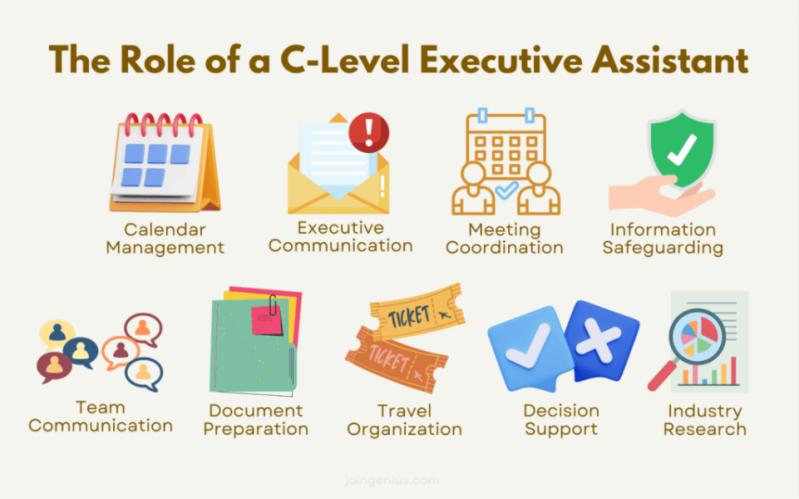
On any given day, my role may involve:
- Protecting executive time by distinguishing urgency from importance
- Acting as a strategic gatekeeper for information, communication, and access
- Coordinating across teams to ensure alignment and clarity
- Safeguarding sensitive information with discretion and integrity
- Providing context and structure to support sound decision‑making
- Initiating actions, monitoring progress, and ensuring governance is followed through
This work is not transactional. It requires situational awareness, emotional intelligence, and a deep understanding of both the business and the people within it.
The Right Leader Knows It Is Never “Just an EA”
The most effective leaders understand one crucial truth: there is no such thing as “just an Executive Assistant.”
The right leader recognises that a strong EA is not an administrative layer, but a strategic asset. Someone who protects focus, absorbs pressure, filters noise, and enables leaders to operate at their best.
At C‑suite level, an Executive Assistant often sees what others cannot: shifting priorities, emerging risks, organisational tension, and opportunities for improvement. Leaders who value this perspective make better decisions because they listen, trust, and respect the role.
Why the Role Matters More Than Ever & Owning the Impact
Modern leadership environments are fast‑moving and complex. Time is limited. Decision fatigue is real. Information overload is constant.
In this context, a strong Executive Assistant is not a luxury. It is a competitive advantage.
When the role is done well:
- Leaders gain clarity and bandwidth
- Teams experience stronger communication and fewer bottlenecks
- Decisions are made with better context and timing
- Organisational momentum is maintained
- Deadlines are met with consistency and confidence
The Executive Assistant becomes a stabilising force amidst constant change.
The value of the role can feel under‑acknowledged simply because success often looks like quiet effectiveness.
However, the truth remains: strong leadership rarely happens in isolation.
Behind every effective executive is someone ensuring alignment, protecting focus, and anticipating what comes next. The right leaders know this. The best ones say it out loud.
To those working at C‑Level and ever questioning the impact of the role, it is significant. It is strategic. And it matters every single day.
Knowing Your Worth
There is one final perspective worth considering.
When an Executive Assistant is viewed as “just an EA”, what is often being described is a role defined narrowly by tasks rather than impact. In those circumstances, the relationship naturally becomes transactional, and the opportunity for true partnership is limited.
The most effective leaders recognise that titles matter far less than contribution. They see their Executive Assistant as someone who brings judgement, perspective, and continuity to an increasingly complex leadership environment. That recognition shows up in trust, inclusion, and how openly the role is valued day‑to‑day.
Where that understanding exists, both the leader and the organisation benefit. Where it does not, it can be a signal not of individual capability, but of cultural maturity.
For Executive Assistants, it is important to remember that the skills required at C‑suite level, discretion, adaptability, strategic awareness, and sound judgement, are highly valued in the right environment. When those qualities are recognised and respected, the role becomes not just sustainable, but deeply rewarding.
Strong leadership is always a collective effort. When leaders and Executive Assistants operate as true partners, the impact reaches far beyond the role itself.

By Jax Clayden
28 April 2026
EA4U 2011